Skip to content

Bad breath that brushing won't fix? It could be your tonsils

You brush twice a day. You floss. There are mints in every coat pocket. And still, a few hours later, that sour taste creeps back. If that sounds familiar, your teeth may not be the problem at all. The cause could be sitting a little further back, in your tonsils.

1 in 3people experience bad breath, according to a review of studies from around the world.1
4 in 10adults had small tonsil stones on scans in a hospital study of 2,873 patients. Most had no idea.2
75%of people with bad breath in one clinical study had tonsil stones, against 6% of people without it.3

You are far from alone

Bad breath is one of the most common reasons people see a dentist, and one of the least talked about. A 2018 review that pooled studies from many countries put it at roughly one person in three.1 Most of them never say a word, because it is hard to judge your own breath and awkward to ask anyone else.

Most bad breath starts in the mouth: the gums, the tongue and the teeth. But when someone keeps a careful routine and the smell keeps coming back, the tonsils are one of the first places worth looking.

What tonsil stones actually are

Your tonsils are not smooth. They are covered in small pits and folds called crypts. Food, dead cells, mucus and bacteria settle into those crypts, and over time some of it hardens into small white or yellow lumps. Doctors call them tonsilloliths. Most people just call them tonsil stones.

They range from the size of a grain of rice to a pea. When researchers looked at them under the microscope, they found something closer to a living colony than a stone: a dense film of bacteria, packed into the lump.4

Why they smell so strong

The bacteria living inside a tonsil stone break down proteins and give off volatile sulphur compounds. These are the same gases that dental clinics measure when they test for bad breath, including hydrogen sulphide, the one that smells of rotten eggs.5

That is why a stone you cough up can smell far worse than its size suggests, and why the smell keeps returning while the stones are still there.

Signs it could be your tonsils

  • Your breath turns sour within a few hours of brushing.
  • You sometimes cough up small white or yellow lumps that smell awful when crushed.
  • It feels as if something is caught at the back of your throat.
  • You have a bad or metallic taste that keeps coming back.
  • Mouthwash helps, but only for an hour or so.

Why brushing and mouthwash miss it

A toothbrush stops at your back teeth. Mouthwash mostly washes over your teeth and the front of your tongue, and gargling rarely reaches deep into the folds of the tonsils. So you can do everything right at the sink and still leave the source of the smell untouched. Mouthwash can mask the smell for a while, which is why it seems to help and then fades.

What you can do day to day

  • Clean your tongue. The back of the tongue holds a lot of the same bacteria. A tongue scraper or your toothbrush works.
  • Drink water through the day. A dry mouth lets bacteria settle. Saliva is your mouth's own rinse.
  • Gargle with warm salt water. It is gentle, cheap and helps loosen debris.
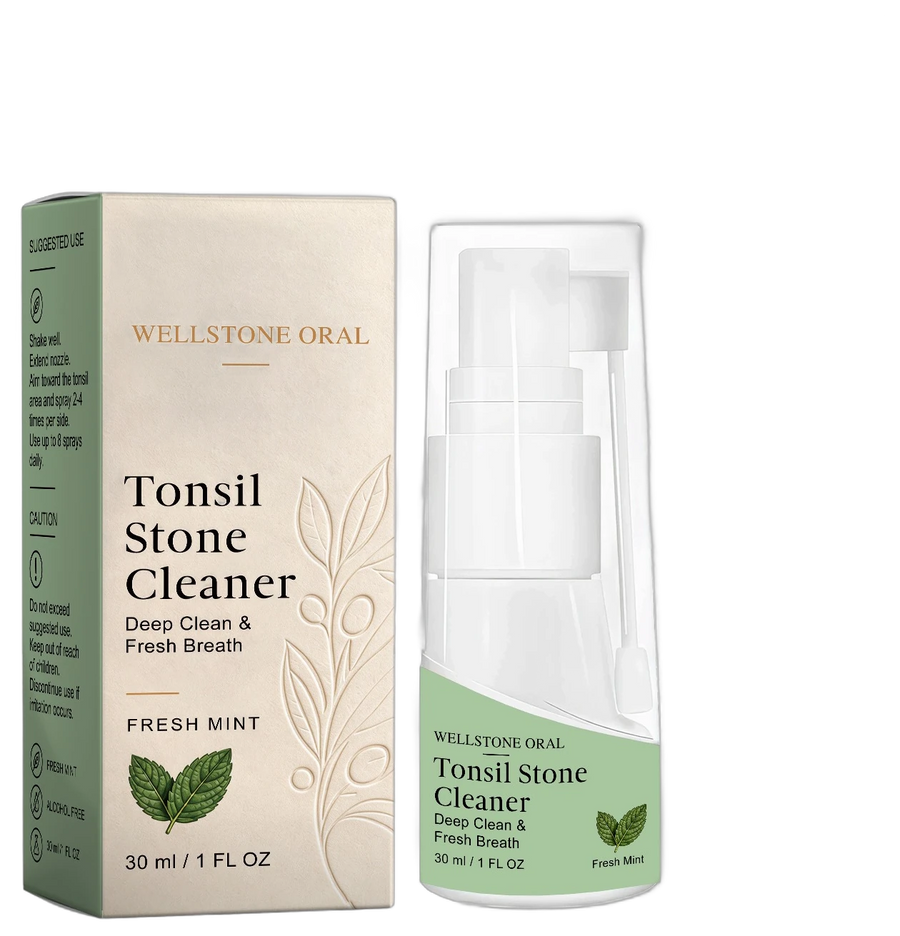
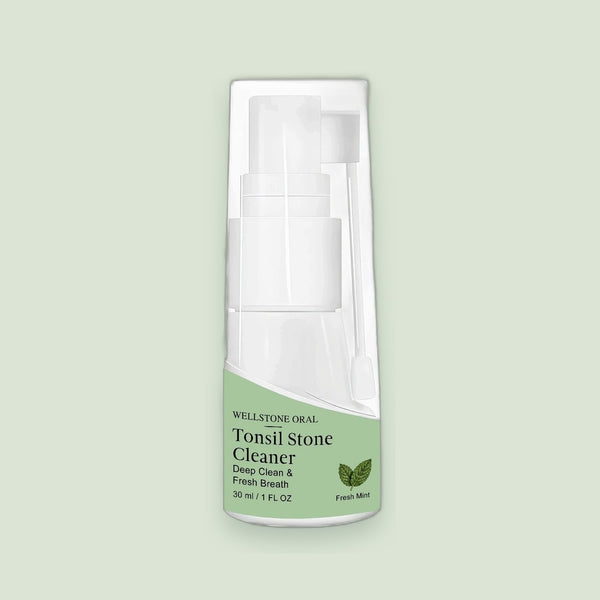
  • Rinse the back of the throat directly. A spray with a long nozzle can reach the tonsils in a way a rinse can't. This is the reason we made our Tonsil Stone Cleaner.
  • Don't dig. Fingernails, hair grips and sharp objects can scratch the tonsils and cause bleeding or infection.

When to see your GP or dentist

Tonsil stones are common and usually harmless, but speak to a GP or dentist if:

  • you have repeated sore throats or tonsillitis along with the stones,
  • one tonsil looks larger than the other, or the pain is only on one side,
  • you find it hard or painful to swallow, or the pain spreads to your ear,
  • your breath stays bad even with a good daily routine. Gum disease, sinus problems and reflux can all play a part.

Where stones keep coming back and cause real trouble, a specialist can talk you through the options, including removing the tonsils.

This article is general information, not medical advice. If you are worried about your symptoms, please speak to a healthcare professional.

Sources

  1. Silva MF, Leite FRM, Ferreira LB, et al. Estimated prevalence of halitosis: a systematic review and meta-regression analysis. Clinical Oral Investigations. 2018;22(1):47-55. Pooled prevalence 31.8%.
  2. Takahashi A, Sugawara C, Kudoh T, et al. Prevalence and imaging characteristics of palatine tonsilloliths detected by CT in 2,873 consecutive patients. The Scientific World Journal. 2014. Tonsil stones found in 39.9% of patients.
  3. Dal Rio AC, Franchi-Teixeira AR, Nicola EMD. Relationship between the presence of tonsilloliths and halitosis in patients with chronic caseous tonsillitis. British Dental Journal. 2008;204(2):E4.
  4. Stoodley P, deBeer D, Longwell M, et al. Tonsillolith: not just a stone but a living biofilm. Otolaryngology, Head and Neck Surgery. 2009;141(3):316-321.
  5. Ferguson M, Aydin M, Mickel J. Halitosis and the tonsils: a review of management. Otolaryngology, Head and Neck Surgery. 2014;151(4):567-574.
Buy 2, get 1 free Free UK delivery over £30 Covered by our 60-day money-back guarantee

JournalOral health

Bad breath that brushing won't fix? It could be your tonsils

Why tonsil stones are one of the most overlooked causes of bad breath, what the research says, and what you can do about them.

By the Wellstone Oral team4 min read8 October 20265 sources

123
1Pockets trap debris2It hardens into stones3Bacteria give off sulphur gases

You brush twice a day. You floss. There are mints in every coat pocket. And still, a few hours later, that sour taste creeps back. If that sounds familiar, your teeth may not be the problem at all. The cause could be sitting a little further back, in your tonsils.

1 in 3people experience bad breath, according to a review of studies from around the world.1
4 in 10adults had small tonsil stones on scans in a hospital study of 2,873 patients. Most had no idea.2
75%of people with bad breath in one clinical study had tonsil stones, against 6% of people without it.3

You are far from alone

Bad breath is one of the most common reasons people see a dentist, and one of the least talked about. A 2018 review that pooled studies from many countries put it at roughly one person in three.1 Most of them never say a word, because it is hard to judge your own breath and awkward to ask anyone else.

Most bad breath starts in the mouth: the gums, the tongue and the teeth. But when someone keeps a careful routine and the smell keeps coming back, the tonsils are one of the first places worth looking.

What tonsil stones actually are

Your tonsils are not smooth. They are covered in small pits and folds called crypts. Food, dead cells, mucus and bacteria settle into those crypts, and over time some of it hardens into small white or yellow lumps. Doctors call them tonsilloliths. Most people just call them tonsil stones.

They range from the size of a grain of rice to a pea. When researchers looked at them under the microscope, they found something closer to a living colony than a stone: a dense film of bacteria, packed into the lump.4

Why they smell so strong

The bacteria living inside a tonsil stone break down proteins and give off volatile sulphur compounds. These are the same gases that dental clinics measure when they test for bad breath, including hydrogen sulphide, the one that smells of rotten eggs.5

That is why a stone you cough up can smell far worse than its size suggests, and why the smell keeps returning while the stones are still there.

Signs it could be your tonsils

  • Your breath turns sour within a few hours of brushing.
  • You sometimes cough up small white or yellow lumps that smell awful when crushed.
  • It feels as if something is caught at the back of your throat.
  • You have a bad or metallic taste that keeps coming back.
  • Mouthwash helps, but only for an hour or so.

Why brushing and mouthwash miss it

A toothbrush stops at your back teeth. Mouthwash mostly washes over your teeth and the front of your tongue, and gargling rarely reaches deep into the folds of the tonsils. So you can do everything right at the sink and still leave the source of the smell untouched. Mouthwash can mask the smell for a while, which is why it seems to help and then fades.

What you can do day to day

  • Clean your tongue. The back of the tongue holds a lot of the same bacteria. A tongue scraper or your toothbrush works.
  • Drink water through the day. A dry mouth lets bacteria settle. Saliva is your mouth's own rinse.
  • Gargle with warm salt water. It is gentle, cheap and helps loosen debris.
  • Rinse the back of the throat directly. A spray with a long nozzle can reach the tonsils in a way a rinse can't. This is the reason we made our Tonsil Stone Cleaner.
  • Don't dig. Fingernails, hair grips and sharp objects can scratch the tonsils and cause bleeding or infection.

When to see your GP or dentist

Tonsil stones are common and usually harmless, but speak to a GP or dentist if:

  • you have repeated sore throats or tonsillitis along with the stones,
  • one tonsil looks larger than the other, or the pain is only on one side,
  • you find it hard or painful to swallow, or the pain spreads to your ear,
  • your breath stays bad even with a good daily routine. Gum disease, sinus problems and reflux can all play a part.

Where stones keep coming back and cause real trouble, a specialist can talk you through the options, including removing the tonsils.

This article is general information, not medical advice. If you are worried about your symptoms, please speak to a healthcare professional.

Sources

  1. Silva MF, Leite FRM, Ferreira LB, et al. Estimated prevalence of halitosis: a systematic review and meta-regression analysis. Clinical Oral Investigations. 2018;22(1):47-55. Pooled prevalence 31.8%.
  2. Takahashi A, Sugawara C, Kudoh T, et al. Prevalence and imaging characteristics of palatine tonsilloliths detected by CT in 2,873 consecutive patients. The Scientific World Journal. 2014. Tonsil stones found in 39.9% of patients.
  3. Dal Rio AC, Franchi-Teixeira AR, Nicola EMD. Relationship between the presence of tonsilloliths and halitosis in patients with chronic caseous tonsillitis. British Dental Journal. 2008;204(2):E4.
  4. Stoodley P, deBeer D, Longwell M, et al. Tonsillolith: not just a stone but a living biofilm. Otolaryngology, Head and Neck Surgery. 2009;141(3):316-321.
  5. Ferguson M, Aydin M, Mickel J. Halitosis and the tonsils: a review of management. Otolaryngology, Head and Neck Surgery. 2014;151(4):567-574.

Get to the back of it.

Ten seconds, morning and night. From £13.33 a bottle.

  • Free UK delivery over £30
  • 60-day money-back guarantee
  • Sent from the UK
Tonsil Stone Cleaner box and spray bottle